Quality: shown, and measured
Nothing on this page asks you to take our word. The clips were rendered by Torqwave, the numbers were measured by its own code, and what has not been checked is listed as plainly as what has.
Before and after
Damage of a known kind and amount, put on clips Torqwave's own instruments played, then repaired by the same code the Effects menu runs, at its default settings.
Clicks
- The clip
- Torqwave Synth: Concrete Pad's chords under Cold Bell's arpeggio, four bars at 120 BPM.
- The damage
- 60 clicks put in, each one to three samples long at 40 to 90% of full scale, in both channels.
- The repair
- Effects > Noise Reduction and Repair > Click and Pop Repair at its defaults (threshold 18 dB, clicks up to 3 ms).
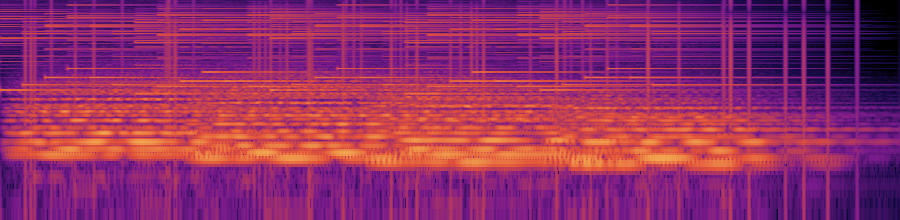
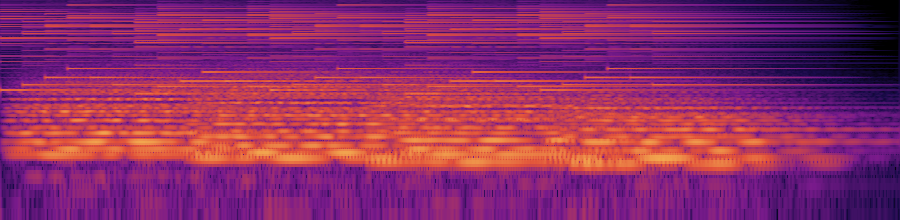
| Measured | With the clicks | Clicks repaired |
|---|---|---|
| Clicks | 60 put in | 60 repaired, 0 skipped |
| Places still more than a tenth of full scale from the clean clip | 0 | |
| Places within a hundredth of full scale of it | 25 | |
| Places in between | 35 | |
| How far the clip is from the clean one | −15.0 dB | −46.9 dB |
Hiss, with a noise print
- The clip
- Torqwave Synth: Concrete Pad's chords under Cold Bell's arpeggio, four bars at 120 BPM, after a second of the noise alone.
- The damage
- White noise at -38 dBFS RMS over the whole clip.
- The repair
- Effects > Noise Reduction and Repair > Noise Reduction: the print taken from the first second, then the whole clip reduced by 12 dB (the default) and by 24 dB.
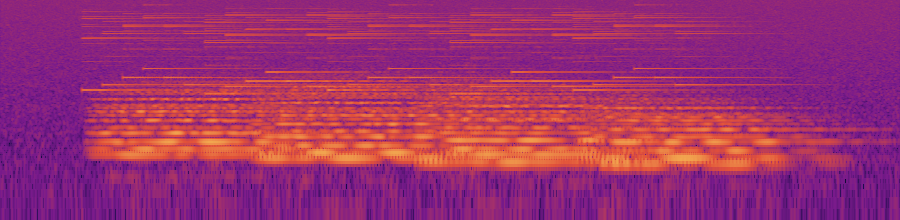
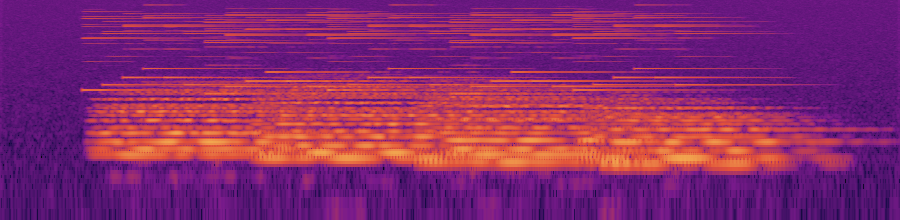
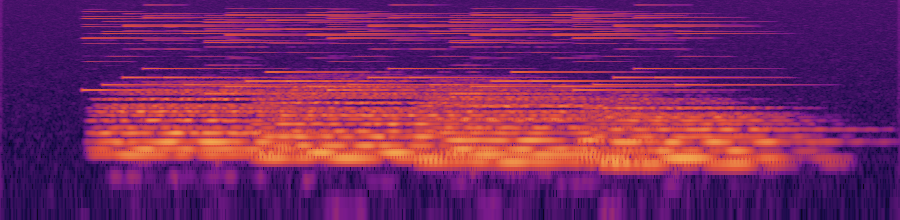
| Measured | With the hiss | Reduced by 12 dB | Reduced by 24 dB |
|---|---|---|---|
| The noise alone, in the first second (RMS) | −38.0 dBFS | −49.9 dBFS | −61.5 dBFS |
| How far the music is from the clean clip | −13.7 dB | −21.0 dB | −21.4 dB |
Mains hum
- The clip
- Torqwave Synth: Concrete Pad's chords under Cold Bell's arpeggio, four bars at 120 BPM.
- The damage
- A 50 Hz hum with five harmonics: the fundamental at -34 dBFS, each harmonic 6 dB under the one before.
- The repair
- Effects > Noise Reduction and Repair > Remove Hum at its defaults (50 Hz, 8 harmonics, Q 30).
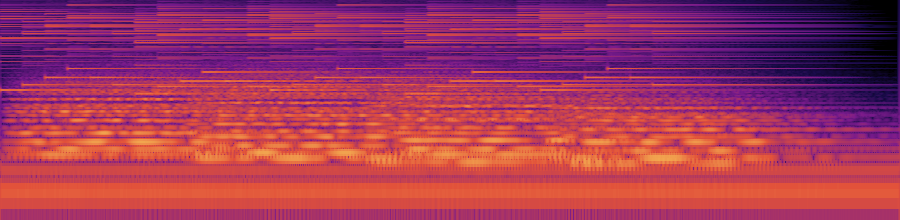
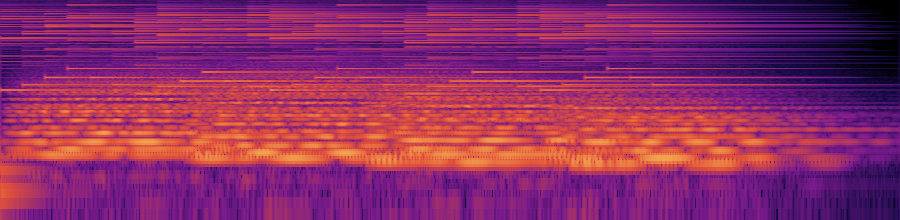
| Level at | Clean clip | With the hum | Hum removed |
|---|---|---|---|
| 50 Hz | −91.0 dBFS | −34.0 dBFS | −66.2 dBFS |
| 100 Hz | −76.9 dBFS | −40.0 dBFS | −68.5 dBFS |
| 150 Hz | −74.3 dBFS | −46.0 dBFS | −75.7 dBFS |
Missing highs
- The clip
- The factory kit Machine Pulse Kit (Machine/Machine Pulse), its loop twice, as the Sequence Library plays it.
- The damage
- Everything over 5 kHz filtered away (eight 12 dB low-pass sections in a row at 5 kHz).
- The repair
- Effects > Noise Reduction and Repair > Spectral Recovery at its defaults (the cutoff found from the audio, level -3 dB, rebuilt up to 16 kHz).
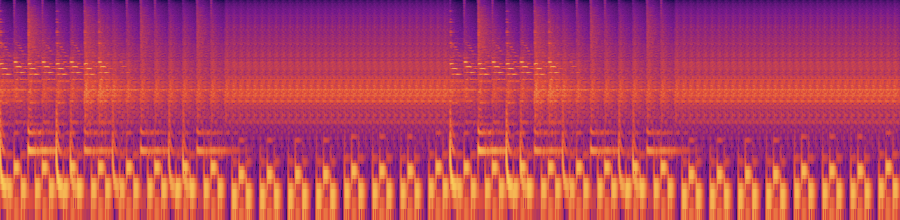
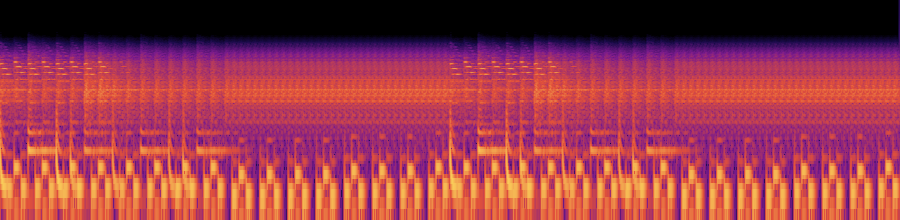
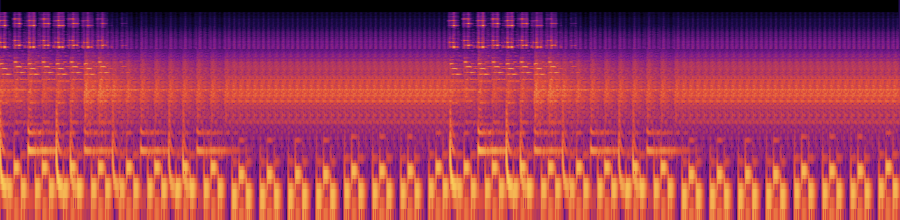
| Measured | The original | Nothing over 5 kHz | Highs rebuilt |
|---|---|---|---|
| Level from 6 to 16 kHz | −39.8 dB | −91.4 dB | −37.9 dB |
| The cutoff Torqwave found | 5,000 Hz |
Loudness: a loop brought to −10 LUFS
- The clip
- The factory kit Machine Pulse Kit (Machine/Machine Pulse), its loop twice, as the Sequence Library plays it.
- The damage
- Nothing: the loop as the instruments made it.
- The repair
- Effects > Dynamics > Maximizer: Balanced, ceiling -1 dBTP, its gain set so the clip measures -10 LUFS.
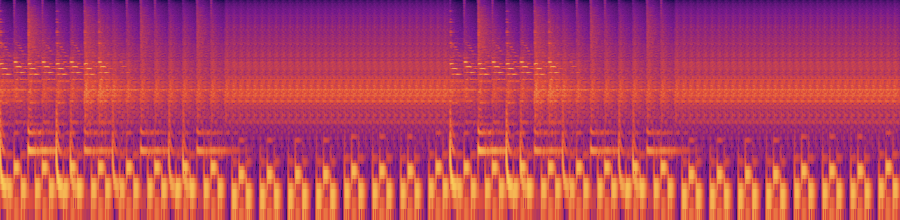
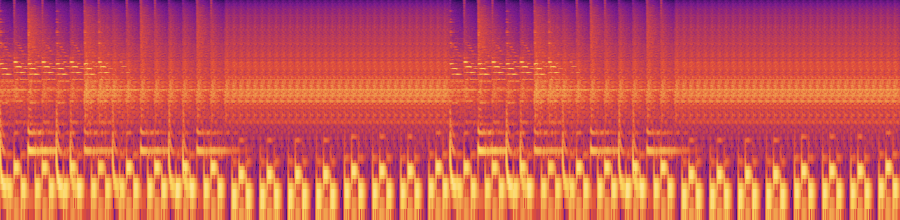
| Measured by Torqwave's loudness meter | As rendered | Through the Maximizer |
|---|---|---|
| Integrated loudness | −17.7 LUFS | −10.0 LUFS |
| True peak | -4.65 dBTP | -1.03 dBTP |
| Loudness range | 3.2 LU | 1.9 LU |
| Gain into the ceiling | 8.4 dB |
What these do not show
- Made-up damage is easier than real damage. White noise, a pure hum and a clean low-pass are the textbook cases. A real recording's noise changes as it goes and its hum wanders. The changelog records what the repair tools did on four real recordings, and what had to be fixed after.
- One repair was measured the same way and is not shown, because it does not do well enough on drums. Repair Clipping, on the kit's loop cut off flat 4 dB over full scale (1,544 samples in 334 runs), rebuilt every run and brought the loop 3.2 dB nearer the original by our measure (−34.6 dB from it before, −37.8 dB after). That is better than before 0.21.0, when the same loop came back no nearer (−34.9 dB), and still little: a drum hit's clipped top is noise, and what the repair puts there is mostly a guess from the sound round it. The changelog measures it on a struck chord, where it does far better. Click and Pop Repair was not shown before 0.21.0 either, when it left 16 of these 60 clicks standing; it is above now.
TorqwaveTests --quality-demos <folder> --also clicks,clippingrenders both. - Every repair here ran at its defaults. Nothing was tuned to the clip.
Measured by the tests
Torqwave's changelog says what each piece of work measured, in numbers. These are its own sentences, with the entry each comes from.
Measured by the tests: every EBU Tech 3341 loudness case (1-5) reads its expected value to 0.1 LU (EBU's tolerance) at 48 and 44.1 kHz, every Tech 3342 loudness-range case (1-4) reads 5.00, 10.00, 15.00 or 20.00 LU as expected, and a quarter-rate sine sampled off its crests reads its true peak within 0.05 dB.
Measured by the tests on 32-bit float audio: a converted sine is 148 to 150 dB above its error for 44.1 to 48, 48 to 44.1, 44.1 to 96 and 96 to 44.1 kHz; the passband is flat within 0.000001 dB to 20 kHz; tones above 22.05 kHz leave at most -144.5 dB when going to 44.1 kHz; 44.1 to 96 and back nulls against the original to 148 dB.
Measured by the tests on a -12 dBFS tone in -40 dBFS white noise: 12 dB asked lowers the noise by 11.84 dB, 24 dB asked by 23.20 dB, the tone's level changes by 0.001 dB, and the noise under the tone drops 11.39 dB too.
Measured by the tests, on two seconds of 50 Hz hum with its third harmonic and a 1 kHz tone: the hum down 105 dB on both channels in the second second and 48 dB in the first tenth of a second, the tone changed by less than 0.001 dB
a 0.9 sine faded in and driven 12 dB into a -1 dBTP ceiling comes out with no sample over the ceiling and its true peak within 0.04 dB of it for every character (one that starts loud at once: 1.1 dB over at its start); a quiet sound with no gain passes bit for bit, where it was
the parametric EQ's minimum-phase and linear-phase runs agree within 0.04 dB per block on all four recordings, and a side band leaves the mono sum bit for bit (minimum phase) or within 1e-6 dB (linear)
every setting gives the same length and the same first sample (0 frames off, 0 over)
chains of 377 and 1029 frames of latency mix bit for bit like the session without them, in blocks of 333, 512 and 3000 frames. Playing from a jump matches the dry mix bit for bit, both through the mixer and through the player.
Measured by the tests: the whole session mixes down bit for bit like playback's mix.
every patch plays a held chord between -24 and -1 dB (the new ones at -12.2 to -7.3 dB, levelled to -9 dB, or -11 for pads, drones and textures); none is a near-copy of another in its category.
what is left beside the tone is 94.7 dB under it at worst, the level within 0.022 dB, and a tone the output can't hold comes through 89.6 dB down at worst.
1,024 sequences and 116 kits unpack; every one keeps the preset rules;
Scripts/voice_names.txtmatches the instruments' patches and kits; every voice names a patch or kit there is and sounds on it between -24 and -1 dB; the script run again writes the same files byte for byte; a kit's parts added together peak below -1 dB; no preset clicks on its voice
The whole suite (2,810+ checks) then passed once in each half of that build, the Intel one under Rosetta, with the signed app as the plug-in scan worker.
What has not been checked
Also in the changelog's own words.
the Windows and Linux workflows run
TorqwaveTests --headlessautomatically on CI, though neither packaged installer was tried by hand on hardware.
Not run on an Intel Mac itself.
They were chosen by the measurements above, which catch silence, clicks, dead macros and copies, and cannot tell a good sound from a dull one.
Not done: the new presets were not listened to one by one.
that the notes are right is measured, whether the result sounds like the recording to an ear is not known. Two notes at once are still matched as one.
Hear and compare
Hear what is built in
Patches, presets, kits and sequences from every built-in instrument, rendered by Torqwave with nothing added.
Against fifteen other editors and DAWs
A feature matrix, each cell read from that product's own documentation, with what Torqwave lacks shown as plainly as what it has.
What use has found
Every problem found by using Torqwave, and the change that fixed it.